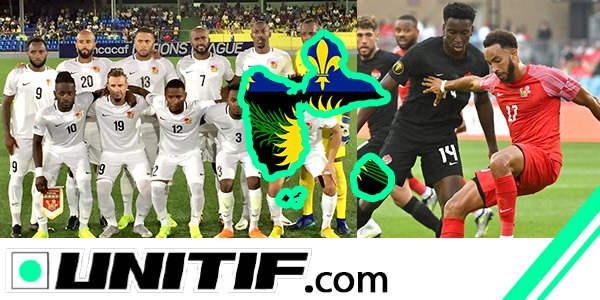
Imagine the roar of the crowd at Stade René Serge Nabajoth. Thousands of Guadeloupean flags float in the air, vibrating to the rhythm of drums and songs. On the pitch, the players of the Guadeloupean selection, galvanized by the energy of their audience, wage a fierce battle for victory. This scene, far from being a simple fiction, illustrates the all-consuming passion that drives Guadeloupeans for football.
Football is not just a sport in Guadeloupe, it is a real institution, a central element of local culture and identity. Generations of talented players have graced the island's courts, nourishing a rich and vibrant heritage that spans the ages.
It is this extraordinary story that we will explore today. A journey through the key moments, the notable figures and the challenges that have shaped Guadeloupean football. From its modest origins to its international influence, let's discover the fascinating trajectory of a passion that unites and inspires an entire people.
The origins of football in Guadeloupe
Football appeared in Guadeloupe at the beginning of the 20th century, brought by settlers and sailors. If the precise date of its introduction remains uncertain, it is probable that the round ball set foot on Guadeloupean soils as early as the 1900s.
Before the arrival of football, other ball sports were popular on the island, including "choubol" and "bassin". These games, derived from English football and rugby, undoubtedly set the stage for the adoption of modern football.
The introduction of football coincided with a period of social and economic change in Guadeloupe. The emergence of an urban middle class and the rise of leisure activities contributed to the popularization of sport.
The first football clubs were founded by settlers and members of the local elite. The Racing Club de Basse-Terre, created in 1904, is considered one of the oldest clubs on the island.
The development of football was stimulated by the creation of the Guadeloupean Football League in 1928. This organization made it possible to structure competitions and promote the sport across the island.
Thus, football took root in Guadeloupe, becoming part of the local culture and becoming a source of pride and unity for the Guadeloupean people.
The development of local football (1930s to 1950s)
The 1930s and 1950s marked the golden age of local football in Guadeloupe. The creation of numerous clubs, such as Étoile de Morne-à-l'Eau, USL Montjoly and Club Colonial, has made it possible to extend the practice of sport across the island.
Local championships were held, attracting enthusiastic crowds and contributing to the rise of rivalry between the clubs. Prominent figures, such as player Félix "Bibi" Dorval and coach Marius "Nono" N'Déké, marked this era with their talent and dedication.
The sporting rivalry with Martinique was born during this period. The meetings between the two selections were unmissable events, punctuated with unique passion and fervor.
Football has become a real social phenomenon in Guadeloupe. It brought together people from all walks of life and was a symbol of unity and pride for the population.
Here are some highlights from this period:
1933: Creation of the Guadeloupean Football League
1938: First edition of the Guadeloupe championship
1948: Guadeloupe participates in the Caribbean Cup for the first time
1950: Birth of Félix “Bibi” Dorval, one of the greatest Guadeloupean players of all time
The development of local football laid the foundations for Guadeloupe's future success on the international stage.
The rise of Guadeloupean football (1960s to 1980s)
The 1960s and 1980s were marked by a significant boom in Guadeloupean football. The structuring of local competitions, with the creation of the Guadeloupe Cup in 1960, made it possible to improve the level of play and professionalize the sport.
Participation in regional tournaments, such as the Caribbean Cup, offered Guadeloupean players the opportunity to compete against other teams and get noticed on the international scene.
The style of play has also evolved during this period. The influence of European football, particularly French, was felt with the introduction of new techniques and tactics.
Player training has also seen significant development. Training centers have been created to allow young talents to flourish and reach their full potential.
Here are some highlights from this period:
1960: Creation of the Guadeloupe Cup
1974: Guadeloupe wins its first Caribbean Cup
1978: Creation of the Pointe-à-Pitre Football Training Center
1982: Guadeloupe participates in the Junior World Cup for the first time
The growth of Guadeloupean football has allowed the national team to rise to the rank of the best teams in the Caribbean.
The national team had its moments of glory during this period, with several notable achievements:
1974: Guadeloupe wins its first Caribbean Cup.
1978: Guadeloupe qualifies for the Junior World Cup.
1983: Guadeloupe reaches the Caribbean Cup final.
These successes contributed to the popularity of football in Guadeloupe and strengthened national pride.
Guadeloupe on the international scene (1990s to today)
Since the 1990s, Guadeloupe has established itself as an essential force in Caribbean football and has acquired growing recognition on the international scene.
The participation of the Guadeloupean selection in major competitions, such as the Gold Cup and the Coupe de l'Outre-Mer, has made it possible to highlight the talent of local players and to promote Guadeloupean football abroad.
Highlights of this period include:
1994: Guadeloupe reaches the quarter-finals of the Gold Cup.
2007: Guadeloupe wins the Overseas Cup.
2009: Guadeloupe reaches the Gold Cup final.
2010: Guadeloupe participates in the Under-17 World Cup for the first time.
Several Guadeloupean players have also distinguished themselves by playing in professional championships abroad. Among the best known, we can cite Jocelyn Angloma, Lilian Thuram, Claude Makelele and Anthony Martial.
Guadeloupe continues to develop its football and aim ever higher. The ambition of the national team is to qualify for the World Cup and compete with the best nations in the world.
Here are some highlights from this period:
1995: Creation of the Professional Football League of Guadeloupe
2007: Guadeloupe wins its first Overseas Cup
2009: Guadeloupe reaches the Gold Cup final
2010: Guadeloupe participates in the Under-17 World Cup for the first time
Guadeloupean football is today a dynamic and attractive sport which attracts many young people. The passion of the public and the talent of the players are the guarantors of a promising future for Guadeloupean football on the international scene.
Guadeloupean football: a mirror of society
Football is much more than just a sport in Guadeloupe. It is a real social phenomenon which plays an important role in the daily life of Guadeloupeans.
Social Link Vector
Football brings people of all backgrounds, ages and social conditions together. It helps create links and strengthen solidarity between individuals.
Symbol of identification and national pride
Football is a source of pride for Guadeloupeans. The successes of the national team are celebrated with fervor and help to strengthen the sense of national identity.
Challenges
However, Guadeloupean football also faces several challenges. The lack of financial resources and adequate infrastructure limits the development of sport and slows down the emergence of new talents.
The future of Guadeloupean football
Despite these challenges, the future of Guadeloupean football is promising. The passion of the public, the talent of the players and the will of the managers constitute major assets for the development of the sport.
It is important to continue to invest in Guadeloupean football in order to allow it to realize its full potential and shine on the international scene.
Here are some examples of the social impact of football in Guadeloupe:
Football is a popular sport that attracts many young people. It allows them to channel their energy and keep them away from delinquency.
Football is a vector of social diversity. It allows people from all backgrounds to meet and share a common passion.
Football is a source of national pride. The successes of the national team contribute to strengthening the feeling of national identity and giving a positive image of Guadeloupe abroad.
Guadeloupean football is a mirror of society. It reflects his strengths and weaknesses, his hopes and his challenges. By supporting the development of Guadeloupean football, we are helping to advance society as a whole.
Guadeloupean football is a rich and vibrant history, punctuated by moments of glory and challenges. From its modest origins to its international influence, football has shaped the identity of Guadeloupe and united its people.
Today, Guadeloupean football is at a crossroads. The development of local talent and the ambition of the national team are guarantees of a promising future.
As the world's gaze turns to Guadeloupe, it is time to showcase the talent of its players and carry the island's colors high on the international stage.
Guadeloupean football has a history to write. Together, let's write it in golden letters.