
Shopping Cart
- -$36.00
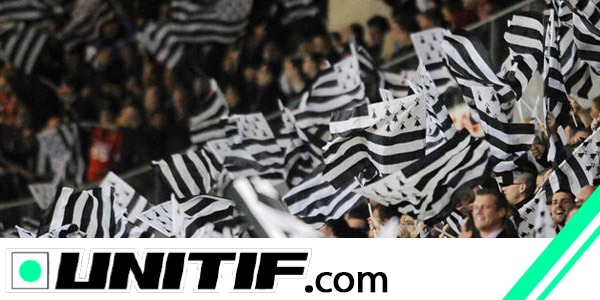
Imagine a bustling stadium, chants resounding in Breton and French, Gwenn ha Du and blue and white flags mingling in the stands. The tension is palpable, the stakes are immense: it is the Breton derby, Rennes against Nantes. More than just a football match, this meeting is a true manifestation of Breton identity, where sporting rivalry is tinged with regional pride and a unique feeling of belonging.
Breton football, born at the beginning of the 20th century, quickly took root in the region, becoming an inseparable element of its culture. Clubs like Stade Rennais FC, FC Nantes, En Avant Guingamp and FC Lorient have marked the history of French football, nourishing the passion of supporters and contributing to Breton identity.
In this article, we will explore the deep links between football and Breton identity. We will analyze how Breton clubs, through their symbols, their actions and their supporters, constitute important vectors of Breton culture. The role of Breton players as ambassadors of this identity will also be highlighted. Finally, we will reflect on the challenges facing Breton football today and its future in the cultural landscape of the region. So, fasten your seat belts, the kick-off is given for a journey to the heart of Breton football and Breton identity!
Breton football was not born by chance. Its roots lie deep in the history and culture of the region, nourished by a sense of belonging and a desire to assert a distinct identity.
From the beginning of the 20th century, football was established in Brittany, supported by clubs like Stade Rennais FC (founded in 1901) and FC Lorient (1926). Its rapid development can be explained by several factors. First, the growth of industry and urbanization favored the creation of clubs and the practice of sport. Then, football proved to be a formidable vector of expression for a Breton identity in search of recognition. In a context where Breton culture was marginalized by the French state, football allowed Bretons to come together and assert their pride.
The feeling of belonging to a distinct Breton community has played a crucial role in the development of Breton football. Breton clubs have become places of gathering and expression of this identity. The Gwenn ha Du flag, symbol of Brittany, flew in the stadiums, and Breton songs resonated in the stands. Football allowed Bretons to feel united and celebrate their common culture.
In addition, the cultural opposition between Brittany and France has helped to strengthen the link between football and Breton identity. Football has become a means of resistance to cultural assimilation and a way of demanding recognition of Breton culture. The matches against French clubs were experienced as strong moments of this opposition, where Breton supporters were galvanized by the feeling of defending their identity.
Finally, it is important to mention the possible influence of other traditional Breton sports on the playing style of Breton footballers. Gouren, for example, a Breton wrestling that emphasizes physical strength and fighting spirit, may have influenced the playing style of Breton players, known for their commitment and combativeness.
In conclusion, Breton football is not just a sport. It is deeply rooted in the history and culture of the region, and constitutes an important element of Breton identity. Football allowed Bretons to come together, express themselves and celebrate their common culture. Understanding Breton football means understanding an important part of the Breton soul.
Breton football is not just a simple sporting passion. Breton clubs play a crucial role in the promotion and transmission of Breton identity. True vectors of this identity, they contribute to its maintenance and dynamism through their symbols, their actions and their supporters.
Among the most emblematic Breton clubs, we can cite Stade Rennais FC, FC Nantes, En Avant Guingamp and FC Lorient. Each has a rich history and vibrant culture that nourishes Breton identity. Stade Rennais, for example, founded in 1901, is the Breton club that has played the longest in the French elite. Its history is punctuated by glorious moments, such as the victory in the Coupe de France in 1965 and the Coupe de la Ligue final in 2013. FC Nantes, for its part, experienced its golden age in the 1970s and 1980s. , including victory in the Coupe de France in 1979 and the title of French champion in 1980 and 1983.
The Gwenn ha Du flag, symbol of Brittany, is omnipresent in Breton stadiums. It proudly floats in the stands and is brandished by supporters during matches. Breton songs also resonate in the sports arenas, creating a unique and vibrant atmosphere which expresses the pride of being Breton.
In addition to these symbols, Breton clubs carry out concrete actions to promote Breton culture. Stade Rennais has notably created a “Breton language” section within its football school, allowing young players to learn the Breton language. FC Lorient has also set up an education program in Breton culture for its young players.
Breton supporters play an essential role in transmitting Breton identity. Their songs, their encouragement and their passion contribute to the unique atmosphere of Breton stadiums. They are also the first ambassadors of their clubs and Breton culture to the outside public.
The rivalry between Breton clubs and more established French clubs is another important element that strengthens Breton identity. Matches against French clubs are always eagerly awaited and experienced as strong moments by Breton supporters. The challenge is twofold: sporting, of course, but also identity. During these matches, Breton supporters mobilize to defend their club and their region.
In conclusion, Breton clubs are important vectors of regional identity. Through their symbols, their actions and their supporters, they contribute to the promotion and transmission of Breton culture. Breton football is therefore much more than a simple sport, it is an essential element of Breton identity.
Breton football is also a story of men. Iconic Breton players have marked the history of French and international football, while proudly embodying their Breton identity.
Among these essential figures, we can cite Raymond Keruzoré, native of Plougastel-Daoulas, who marked the history of Stade Rennais FC in the 1950s and 1960s. Nicknamed "the little prince", he was known for his talent and his combativeness. , and was considered a true symbol of Brittany on the ground.
More recently, Yannick Stopyra, originally from Landerneau, shone at FC Nantes in the 1980s and 1990s. A talented striker, he also left his mark with his commitment and his attachment to Brittany. He is also one of the founders of the “Bretagne Culture Diversité” association, which aims to promote Breton culture.
These Breton players do not just embody the Breton identity on the pitch. Outside of the stadiums, they often get involved in the life of the region and contribute to the promotion of its culture. They are true ambassadors of Brittany, spreading its values and dynamism to a wide audience.
Even Breton players playing in clubs outside Brittany maintain a strong link with their region. They often feel indebted to Brittany and its clubs which allowed them to launch into professional football. They do not hesitate to display their pride in being Breton during interviews or public demonstrations.
In conclusion, Breton players are important ambassadors of Breton culture. Through their talent, their commitment and their attachment to the region, they contribute to making Brittany shine on the national and international scene. Breton football is therefore much more than a simple sport, it is an essential vector of Breton identity.
Breton football is a unique phenomenon that goes beyond the simple sporting framework. It is deeply rooted in the history and culture of the region, and constitutes an essential element of Breton identity. Breton clubs, Breton players and Breton supporters all play a crucial role in promoting and transmitting this identity. Breton football is a source of pride for Bretons and an important element of the region's cultural heritage.
Breton football is not immune to challenges. The increasing professionalization and globalization of sport can threaten its unique character and its deep connection with Breton identity.
Challenges and threats
The professionalization of Breton football has led to a certain loss of control of clubs by supporters. The arrival of foreign investors and the race for money can dilute the Breton identity of clubs and distance them from their local roots. In addition, the globalization of sport exposes Breton clubs to increased competition from foreign clubs, which can endanger their financial and sporting survival.
Economic and social impact
Despite these challenges, Breton football has a positive impact on the economic and social development of the region. Breton clubs attract tourists and investors, and contribute to job creation. Breton football is also a vector of social cohesion and integration, bringing together people from all backgrounds around a common passion.
Future of Breton football
The future of Breton football will depend on its ability to adapt to the challenges of globalization while preserving its unique character and its link with Breton identity. Breton clubs will have to find a balance between the search for sporting performance and the preservation of their local values. Support from fans will also be crucial to maintaining Breton football as an important part of Breton culture.
Questions for the future
Can Breton football survive globalization and professionalization without losing its soul? How can Breton clubs reconcile the search for sporting performance and the preservation of their identity? What role will Breton football play in perpetuating Breton identity in the years to come?
Breton football is at a crossroads. Its future is uncertain, but its importance for Breton culture is undeniable. The challenge for future generations will be to find a balance between the demands of modern sport and the preservation of what makes Breton football so special.
Breton football is much more than just a sport. It is deeply rooted in the history and culture of the region, and constitutes an essential element of Breton identity. Breton clubs, Breton players and Breton supporters all contribute to the promotion and transmission of this identity.
Breton football faces significant challenges, but it also has a positive impact on the economic and social development of the region. Its future will depend on its ability to adapt to the demands of modern sport while preserving its unique character and its link with Breton culture.
Key points of the article
Breton football was born at the beginning of the 20th century and quickly developed in Brittany.
Breton clubs are important vectors of Breton identity.
Breton players embody Breton identity on and off the field.
Breton football has a positive impact on the economic and social development of the region.
The future of Breton football will depend on its ability to adapt to the challenges of globalization.
Importance of Breton football
Breton football is a significant element of Breton identity. It allows Bretons to come together, express themselves and celebrate their common culture. Breton football is also a vector of pride and unity for the region.
Future evolution of Breton football
Breton football is at a crossroads. Its future is uncertain, but its importance for Breton culture is undeniable. The challenge for future generations will be to find a balance between the demands of modern sport and the preservation of what makes Breton football so special.


Thanks to our reliable partners, UPS and Fedex

Thanks to our partners Paypal, Stripe and Amazon Pay

You changed your mind ? 100% Money-Back Guarantee without any questions asked

By phone at +33 7 71 18 51 68 or by Whats'app or by email help@unitif.com